Where Bourbon,
Horses & Trains
Meet
A living tribute to the town that gave America its native spirit, its greatest racehorses, and the rails that carried them both.
Paris, Kentucky is not just a place on the map. It is the origin story of the American spirit — bourbon whiskey, the thoroughbred horse, and the railroad that connected a young nation.
Bourbon • Horses • Trains
Tap a tile to explore the story in depth — right here.
In 1785, Bourbon County was carved out of Fayette County and named after the French royal House of Bourbon — a thank-you to France for helping win the Revolutionary War.
The county’s farmers had more corn than they could eat or ship. They distilled the surplus into whiskey. When the first barrels traveled down the Ohio and Mississippi rivers to New Orleans, merchants stamped them “Old Bourbon” because that was the county of origin.
The name stuck. What we now call bourbon whiskey was literally born in the fields and stills around Paris, Kentucky. The limestone-filtered water, the corn mash, the charred oak barrels — these traditions started right here in Bourbon County.
Bourbon County officially formed
“Old Bourbon” whiskey ships from these parts
Over 95% of the world’s bourbon still comes from Kentucky
Then & Now
The Paris Train Depot — exactly as it stood, and exactly as it stands today with the trains still running.
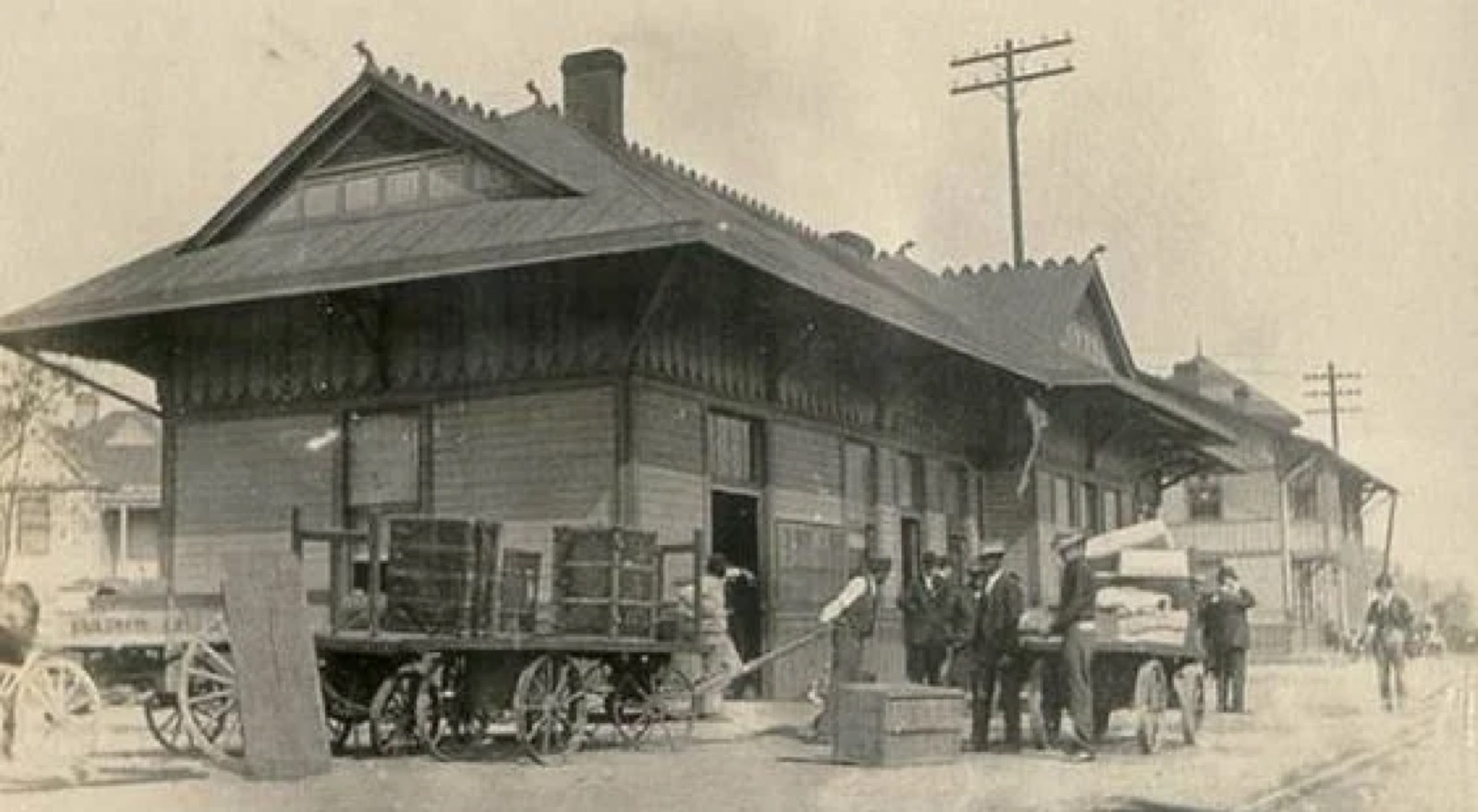
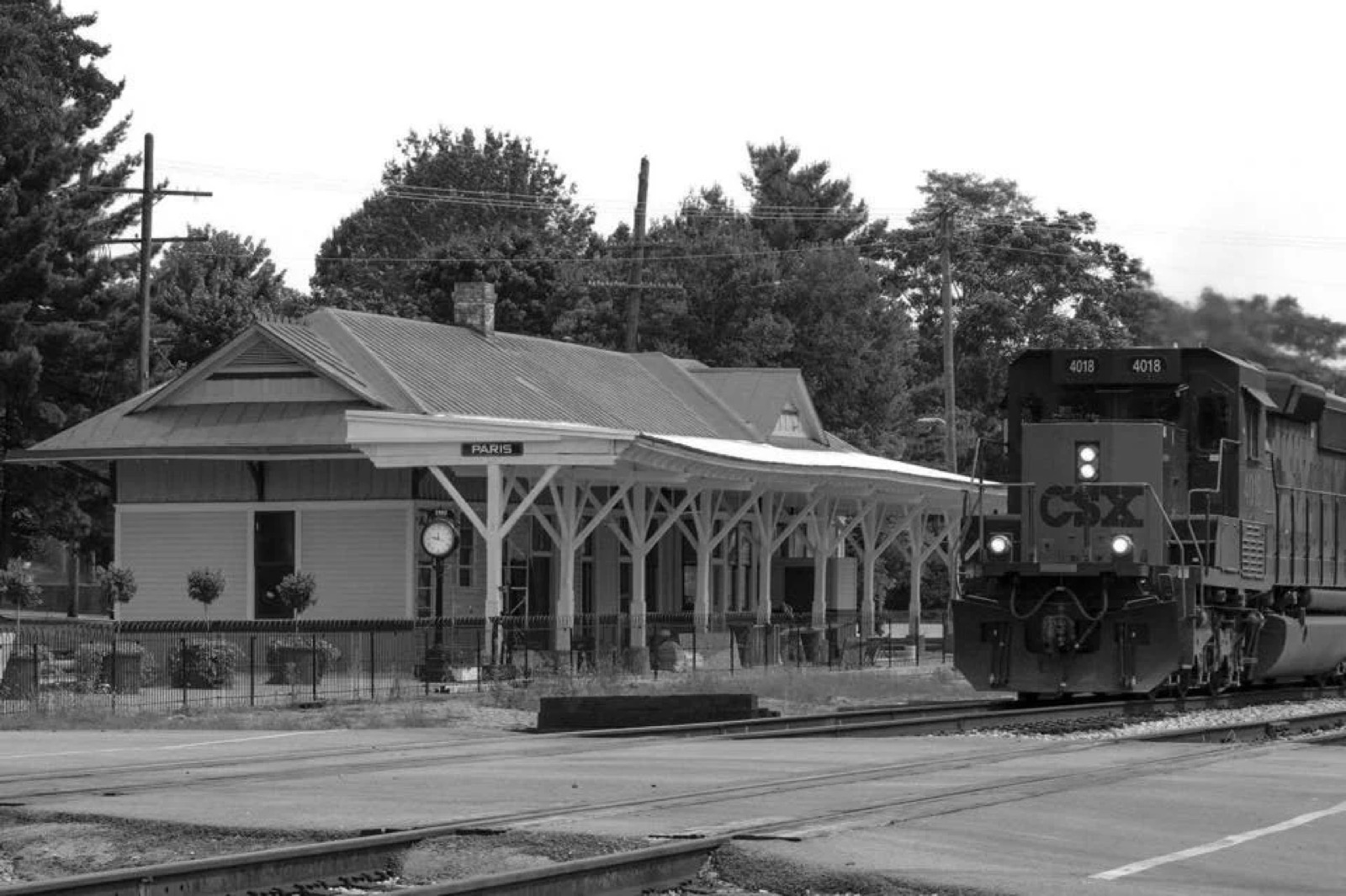
Interior
The main dining room and bar was originally the primary passenger waiting room — the reason for the generous windows that flood the space with natural light today.
The two historic ticket windows — one originally for white passengers and one for Black passengers — were carefully saved and incorporated into the seating area now known as “The Train Booth.”
The middle rooms, once a waiting area for African-American passengers and the depot master’s office, were combined. They now house the kitchen, manager’s office, laundry, and employee facilities.
The second dining room (nearest Winchester Street and used for overflow seating, events, and receptions) was the original baggage room. Its large sliding door once moved luggage and freight. The original baggage scale was preserved and now sits outside.
Exterior
Despite serious deterioration, approximately 85 percent of the original woodwork was saved. Where replacement was necessary, the wood was replicated to match the original.
Every window in the depot is original to the building. They were restored and fitted with new glass.
The three historic paint colors were selected by Debbie Poynter after careful research and visits to the few remaining Kentucky depots of the era.
The butterfly passenger canopy, once much larger (stretching toward Winchester Street), was stabilized and restored while retaining 95 percent of its original wood.
The town clock is not original; it was acquired from a clockmaker in nearby Versailles. A triangular green space north of the depot provides space for outdoor events, music, and gatherings.
The depot is listed on the National Register of Historic Places. Only real photos of the actual building — past and present.
Paris Timeline
This is where it all began.
And it’s still happening here.
Come stand on the platform. Listen for the train. Taste the bourbon. Feel the history of Paris, Kentucky.